The entire process step by step: Everything you need to know or should have known
Imagine the scene: Monday morning, 9:00 a.m. Your boss knocks on your office door and says with a smile:
„Anna, you're organising our annual conference this year. 350 people. 15 May. Budget: 12 million. Good luck!”
And now he's walking out the door, while you're just sitting there thinking, ’Where do I start?'
If this situation sounds familiar, then you've come to the right place. In this article, we aim to provide a comprehensive overview of everything you need to organise an event for 100 to 500 people – and you'll see why it's much more work than you might think at first glance.
Spoiler: By the end, you'll probably say, ‘OK, let someone else organise this, as is usually the case with their partners." And that's perfectly fine. 😊

Why does it matter whether your event has 100 or 500 attendees?
Many people think that a 500-person event is just a ‘bigger version’ of a 100-person event. Okay, more tables, more chairs, more food. Right?
Not necessarily.
An event for 500 people is not a scalable version. It is a COMPLETELY DIFFERENT LEVEL OF COMPLEXITY. And now I will show you exactly why.
Quick comparison: What changes with an increase in headcount?
| Criterion | Event for 100 people | 500-person event |
| Preparation time | 4-10 weeks | 12-24 weeks |
| Location options | Medium-sized hotels, conference centres | Only large-capacity venues, more limited options, especially if there will be a gala dinner with round tables |
| Onsite team | 2-4 coordinators | 8-10 persons |
| Time required for catering | 45-60 minutes (1-2 time slots) | 90-150 minutes (3-5 time slots or multiple locations) |
| Average cost per person | 30-50,000 HUF (depending on location) | 32-55,000 HUF (MORE EXPENSIVE/per person!) |
| Technical complexity | Basic AV (audiovisual), 1-2 microphones | LED walls, stage technology, 6-10 microphones, live broadcast |
| Risk level | Manageable, errors can be fixed quickly | HIGH – A major error affecting more than 500 people could be very unpleasant. |
Step 1: Location search and selection – This is an important part
The venue is not just a hall/hotel/centre where „we'll hold the event somehow’. It is the foundation on which EVERYTHING is built. And choosing an unsuitable venue? That could be a disaster.
100-person event – Easier, but not simple
For 100 people, there are quite a few venues to consider:
- Conference rooms in 4-star hotels
- Boutique event spaces
- Smaller conference centres, restaurants
- Countryside wellness hotels
What makes a venue GOOD for 100 people?
- Depending on the programme, one room may be sufficient, but it should preferably be 120-150 m².
- It must be clarified that theatre, school desks and round table arrangements will be required.
- Basic AV equipment: projector, screen, 2 microphones, flipchart
- Meals: it is fortunate if they can eat at the same time.
- It is good to have information about the standard of service provided at the given locations. This is usually market information that companies do not generally have access to.
- Parking: 30-40 spaces available
An event for 500 people – that's middleweight! 😊
For 500 people, it is NOT ‘just a larger room’ that is needed. Here, the COMPLEXITY OF THE SYSTEM increases exponentially.
What venues are being considered?
- Ballrooms of 5-star hotels (e.g., Marriott, Intercontinental, etc.)
- Conference centres (e.g. Hungexpo, SYMA)
- Special event venues (e.g. Akvárium Klub)
- Large hotels in rural areas (e.g. Pelion Tapolca, Spirit Hotel Sárvár)
The challenges:
- A hall of around 600 m² is required (theatre seating), with several smaller rooms that can be connected depending on the programme.
- Parking: minimum 200-350 spaces (or bus transfer)
- Complex stage technology setup
- Several catering units in parallel (3-4 buffet stations)
- Acoustics and viewing angle: everything must be visible/audible even from the back rows
⚠️ TRUE STORY: We had a client who chose the venue himself – a hotel where the largest room could accommodate 220 people, but 420 people were expected to attend the conference. The client made a mistake by not assessing the situation, and the hotel made a mistake by not pointing it out. Fortunately, we drew their attention to this in time, BEFORE they signed the contract, thus saving them from disaster. They have continued to place their trust in us ever since.

Location selection checklist – Always review this!
100 persons:
- Room size min. 120 m²
- Is there natural light?
- WiFi bandwidth min. 50 Mbps
- Is there a breakout room?
- Can external catering be brought in? Is there an extra charge?
500 persons:
- Plenary hall size min. 600 m²
- We are fortunate to have an additional 3-500m² area next to the plenary hall.
- It is necessary to investigate the air conditioning system to determine whether it is capable of cooling the room during an event held in the heat of summer. Is there any evidence or commitment to this effect?
- What are the access routes?
- How big is the goods lift? (if there is no loading dock)
- What is the energy supply like?
- Is there an exhibition space? How can it be accessed?
- Where should coffee breaks be held?
- Are there enough toilets?
- How many catering units can be served simultaneously?
- Is there indoor parking, or only street parking?
Step 2: Budget and calculations – So there are no surprises you didn't see coming
The biggest misconception: ‘500 people = cheaper price per person due to volume discount’. Unfortunately, this is not true nowadays.
In fact, with 500 people, the cost per person is often MORE EXPENSIVE because the resource requirements are much greater:
- Larger venue = more expensive energy, air conditioning, lighting
- More staff = more waiters, hostesses, security guards
- More sophisticated technology = stage construction, LED walls, multiple sound systems
- More coordination = more event managers, more stress

Cost example (Budapest, lower-middle standard – high standard):
| Cost item | 100 persons | 500 persons |
| Venue hire | 400,000 – 1,200,000 HUF | 1,200,000 – 3,500,000 HUF |
| Catering (lunch + two coffee breaks) | 2,000,000 – 2,800,000 HUF | 12,000,000 – 15,600,000 HUF |
| AV technology | 300,000 – 500,000 HUF | 1,800,000 – 4,500,000 HUF |
| Hostess / coordination | 100,000 – 250,000 HUF | 400,000 – 1,000,000 HUF |
| Decoration / branding, furnishings | 100,000 – 300,000 HUF | 500,000 – 3,300,000 HUF |
| TOTAL | 2.9 – 5.05 million HUF | 15.9 – 27.9 million HUF |
| Cost per person | 29,000 – 50,500 HUF | 31,800–55,800 HUF |
See? The cost per person is often HIGHER for 500 people because infrastructure, technology and logistics do not scale linearly. Very complex calculations must be made.
And we're only halfway through. If you feel that you would rather leave it to the experts,
👉 Request a quote from us – we have organised more than 200 large-scale events!
Step 3: Catering logistics
Catering is a key part of the event. Everything has to run smoothly here. It is good to recognise the buffet capacity of a hotel or restaurant when you visit the venue. There are likely to be long queues, or they may be able to handle this well.

An event for 100 people – There are no big tricks here – one might think, but even here it is possible to make good or bad choices.
- Meal time: 45-60 minutes
- 1 buffet line or seated lunch
- Waiters: 5-8 people are sufficient
- Is the drink package included in the price of the buffet lunch?
Serving lunch to 500 people AT ONCE is a much greater challenge, and there is an increasing shortage of quality labour in the hospitality industry.
Here is the reality:
- Average meal time: 1.5-2 hours
- Here, it is particularly important to consider how many buffet counters there are and how they are positioned.
- Solution: 4-5 buffet lines in parallel, or if the programme allows, lunch in several rounds. This must be closely coordinated with the kitchen.
Example of intermittent fasting:
- 12:00-12:45 – Group 1 (150 people) → Restaurant A
- 12:45-13:30 – Group 2 (150 people) → Restaurant A
- 13:00-13:45 – Group 3 (200 people) → Restaurant B (simultaneously)
- Total: 2.5-3 hours to ensure that EVERYONE is satisfied
And that's just lunch. We haven't even mentioned coffee breaks, welcome drinks, or gala dinners yet.
Staff of 500 people:
- Waiters: approx. 20-30 people
- Kitchen staff: 15-25 persons
- Catering manager: 2-3 coordinators
- Bar staff: 4-6 persons (if drinks are served)
Step 4: Technical requirements
Most people think, ‘A projector, a microphone, and we're ready to go.’ But it's worth taking a closer look at this area, because a lot depends on it.
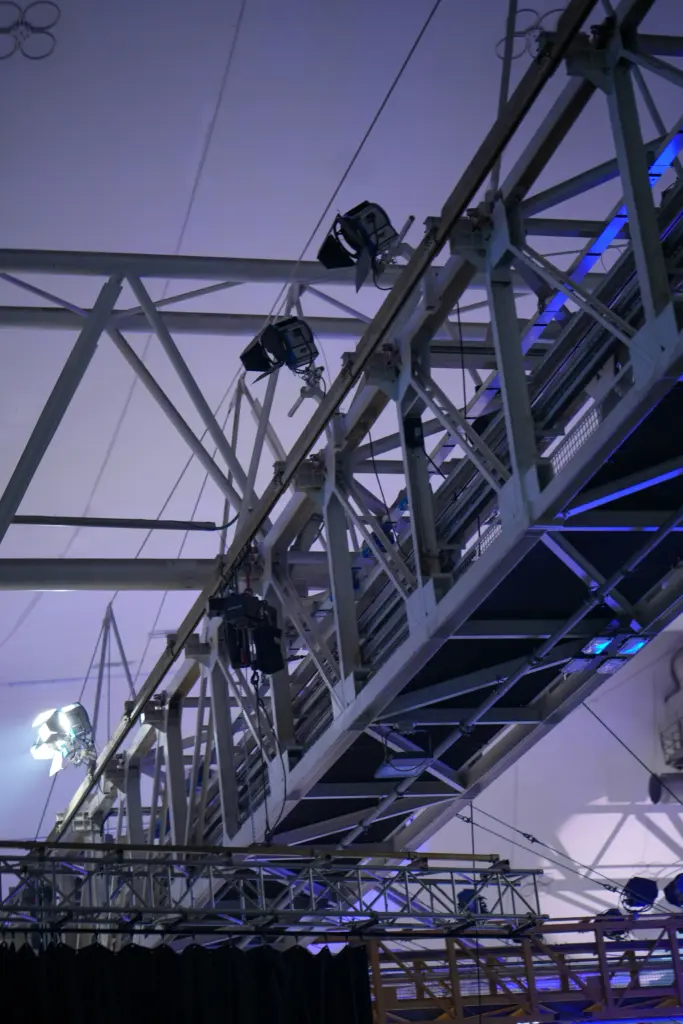
Event technology for 100 people
Basic equipment:
- Projector (min. 5000 lumens) + screen
- 2-3 wireless microphones and presenters (for presentations)
- Basic sound system (4-6 speakers)
- Laptop connection (HDMI, VGA)
- Typically a 3×3 metre stage – unless there is a larger round table discussion
- Basic lighting (natural light + decorative lamps)
- Onsite technician: 1 person is sufficient
Set-up time: 2-3 hours
Equipment for events with 500 attendees
Here, you need to choose a service provider who really knows their stuff:
- LED wall or large projection screen (min. 6×4 metres), additional projectors, large TVs.
- Professional sound system (line array, subwoofers)
- 6-10 wireless microphones – depending on the number of speakers
- Stage construction (if there is no built-in stage)
- Spotlight system + moving heads (for gala events)
- Live broadcast (if a hybrid event or recording is required – how many camera positions?)
- Echo cancellation (acoustics in large rooms are important!)
- Technicians: 4-8 persons (sound, lighting, projection, stage)
- Set-up time: 6-10 hours (+ rehearsal!)
⚠️ IMPORTANT: If there is no dedicated loading dock on site, transporting the 2-tonne stage equipment to the 3rd floor may increase costs.
Step 5: Event day – The art of onsite coordination
The big day has arrived. The venue is set, everything is booked, and the guests are arriving. What else could go wrong?
Anything can happen here, and unfortunately there was no dress rehearsal.
Event for 100 people – Onsite coordination
Onsite team:
- 1 event manager (responsible for the entire process)
- 1-2 hostesses (registration, welcoming guests)
- 1 technician (sound, projection)
- Catering team (provided by the hotel/catering company)
Typical daily schedule:
- 08:00 – Site inspection, technical setup check
- 09:00 – Guest reception begins, registration
- 09:30 – Programme start
- 10:45 – coffee break
- 12:30 – Lunch break
- 2:00 p.m. – Afternoon programme
- 3:30 p.m. – coffee break
- 17:00 – Closing, technical breakdown
Communication: Telephone or walkie-talkie (if the area is large)
500-person event – Onsite coordination
This is no longer a matter of simple ‘coordination’, but rather a task for a conductor.
Onsite team:
- 1 main coordinator (event director)
- 2-3 technical coordinators (sound, lighting, projection separately)
- 4-10 hostesses (registration, escorting, information point)
- 1 catering manager
- 2 safety coordinators (crowd control!)
- Total: 10-15 persons ONLY coordination (catering staff separate!)
Communication: it is extremely important that all information arrives on time. For example, if someone has fallen ill.
Yes, it's just like being at a concert or festival. Because that's basically what it is.
Typical daily schedule (500 people):
- 05:00 – Continuation of technical setup (stage, LED wall)
- 07:30 – Team briefing (10-15 person coordination team)
- 08:00 – Sound check, lighting test
- 08:30 – Guest reception begins (registration desks at 3-4 locations)
- 09:00 – Programme start (500 people in front of the stage, continuous microphone replacement)
- 10:30 – coffee break
- 12:00-14:30 – Lunch in shifts (3 time slots simultaneously)
- 14:30 – Afternoon session
- 4:00 p.m. coffee break
- 6:00 p.m. – Dinner / gala evening (if applicable)
- 00:00 – Closing, dismantling (equipment removal the following morning)
Yes, it's an 18-hour day, during which you have to be prepared for anything.
Step 6: What if something goes wrong? – Murphy's Law applies
If there is one universal truth in event planning, it is this:
„If something can go wrong, it will. And it will happen when you least need it.”
Classic examples:
- The projector won't turn on (because no one tested it the day before).
- The microphone buzzes/fizzes/runs out of power
- The catering is 30 minutes late or they set the table too early and the food has gone cold.
- The climate is too cold/too hot
- Someone is feeling unwell (medical assistance is required)
- The CEO's presentation is not going well (Mac vs. PC problem)
A professional event manager ALWAYS has a Plan B:
- Thoroughly assessed technical requirements
- Provision of reserve assets
- A detailed agreed script, continuous management and fine-tuning of the location
- First aid kit + availability of medical assistance
- And most importantly: peace of mind and confidence that the event is in good hands.
This is what an agency UNDERSTANDS. We have seen it all and know how to respond quickly. You can be a guest at your own event because you know we have it covered.
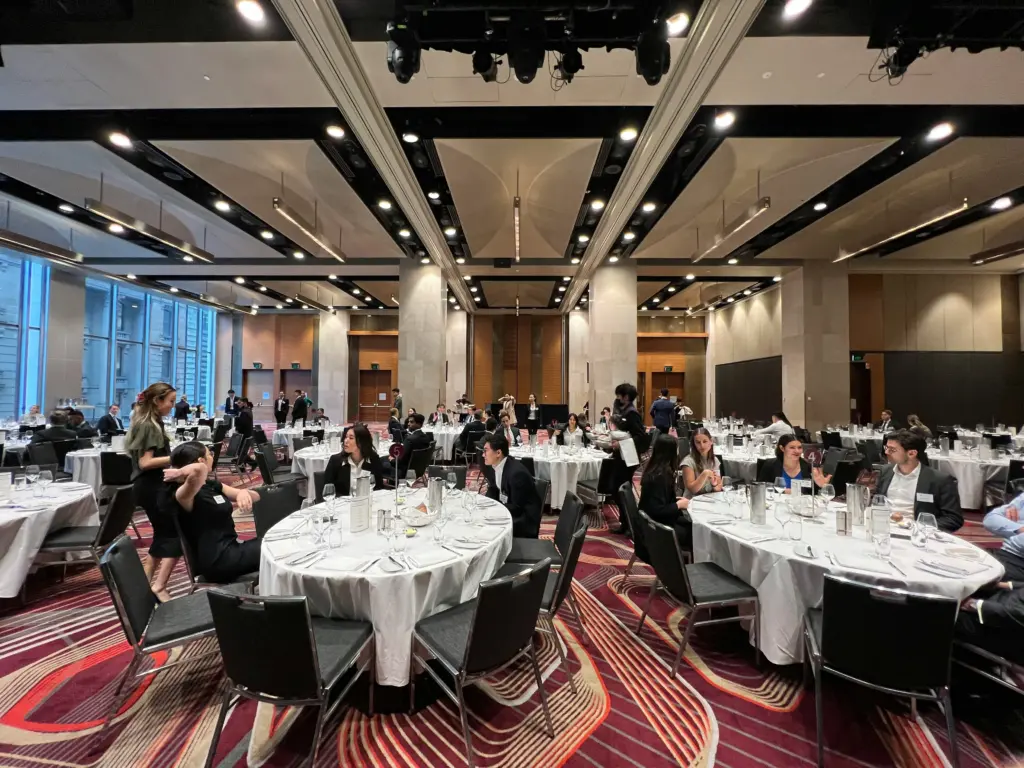
Why is it worth working with an event management agency?
A good team of professionals and a reliable agency will have the following:
Solid market knowledge: knows how the event venues operate
You know the service providers: presenters, event decorators, the best DJs, magicians, stand-up comedians, hostess agencies, casinos, fortune tellers, selfie boxes, photographers, videographers, catering tricks, loopholes, pitfalls, guest behaviour, the course of events, dynamics.
Know how far the blanket reaches and how far you can pull it: Knows the possibilities and limitations.
But wait. Isn't the organisation fee just an extra cost?
NO. It is an INVESTMENT.
Why?
1. We actually save money
An agency does not just ‘mediate’, it COMPETES. We request 5-8 offers, compare them and negotiate. We can take numerous agency steps to ensure you get good conditions for your event. You will not be able to work with so many options on your own, and you do not know the market prices either. What is more, the venues do not know who you are. There are no preferences. There is fairer competition.
2. We save time
Organising an event for 100 people on your own? That's 40-50 hours of work. An event for 500 people? 70-120 hours. And that's even if we know what we're doing. Meanwhile, you're also working and performing other tasks throughout the year, so you can't be expected to have the same routine as an agency.
3. We ask questions about things you wouldn't think of.
Example: Is there a loading dock? How many phases does the power supply have? Can the kitchen handle a load of 500 people? These are questions that, if left unanswered, will lead to disaster.
We KNOW what to look out for.
4. If something goes wrong, WE FIX IT
Is someone feeling unwell? We know where to turn. You just sit back and enjoy the event.
5. One contact person – all problems solved
You won't have to coordinate with 10 different companies (venue, catering, technology, photographer, DJ, etc.). We will coordinate everything. You only need to call one person: us.

Conclusion: Will you do it yourself, or leave it to us?
If you've made it this far, you probably have two thoughts in your head:
1. The stakes are high, and it involves a lot of work – if it goes wrong, it's a waste of money.
2. Perhaps it really would be worth entrusting this to someone else.
And you know what? Both of your thoughts are correct.
Organising an event for 100-500 people is NOT impossible. But it is time-consuming, stressful, and if something serious comes up, it can be very unpleasant.
Fortunately, you can also choose to entrust it to a team that has already organised several large-scale events – and knows what it is doing.

Would you like us to organise your next event professionally and without stress?
For over 10 years, Welovevent has been helping companies organise unforgettable, experience-based events – from finding the venue to the final applause. We have already successfully organised over 200 large-scale events, ranging from 100 to over 500 participants.
━━━━━━━━━━━━━━━━━━━━━━━━━━━━━
📞 Request a free consultation today!
hello@welovevent.com | +36 70 424 43 89
www.welovevent.com
━━━━━━━━━━━━━━━━━━━━━━━━━━━━━
📚 More useful articles:
👉 Why do the details determine how memorable a corporate event will be?